
Zirconia Crowns and Bridges: When Are They Suitable and Why?
Zirconium dioxide, often referred to simply as zirconia, is one of the most widely used materials for restoring teeth in modern dentistry. It combines high strength, good tissue compatibility and the possibility of achieving a natural appearance.
Different restorations can be made from zirconia, including zirconia crowns and zirconia bridges. When are they a suitable choice, what are their main benefits and how does treatment work? This article covers the most important things you should know.
When Is a Zirconia Crown Needed?
Severely damaged teeth, teeth with large fillings and those that have undergone root canal treatment are more vulnerable to fracture. When there is not enough healthy tooth structure for a reliable restoration with a filling, a crown may be recommended.
A crown covers and protects the visible part of the tooth. Its purpose is to restore the tooth’s shape, strength and normal chewing function.
A zirconia crown may be suitable in cases of:
a severely damaged or broken tooth
a large existing filling with little healthy tooth structure remaining
a tooth that has undergone root canal treatment
significant tooth wear
the need to change the shape or colour of a tooth
The decision to place a crown is made after examining the tooth, gums, bite and chewing forces.
What Are Zirconia Crowns?
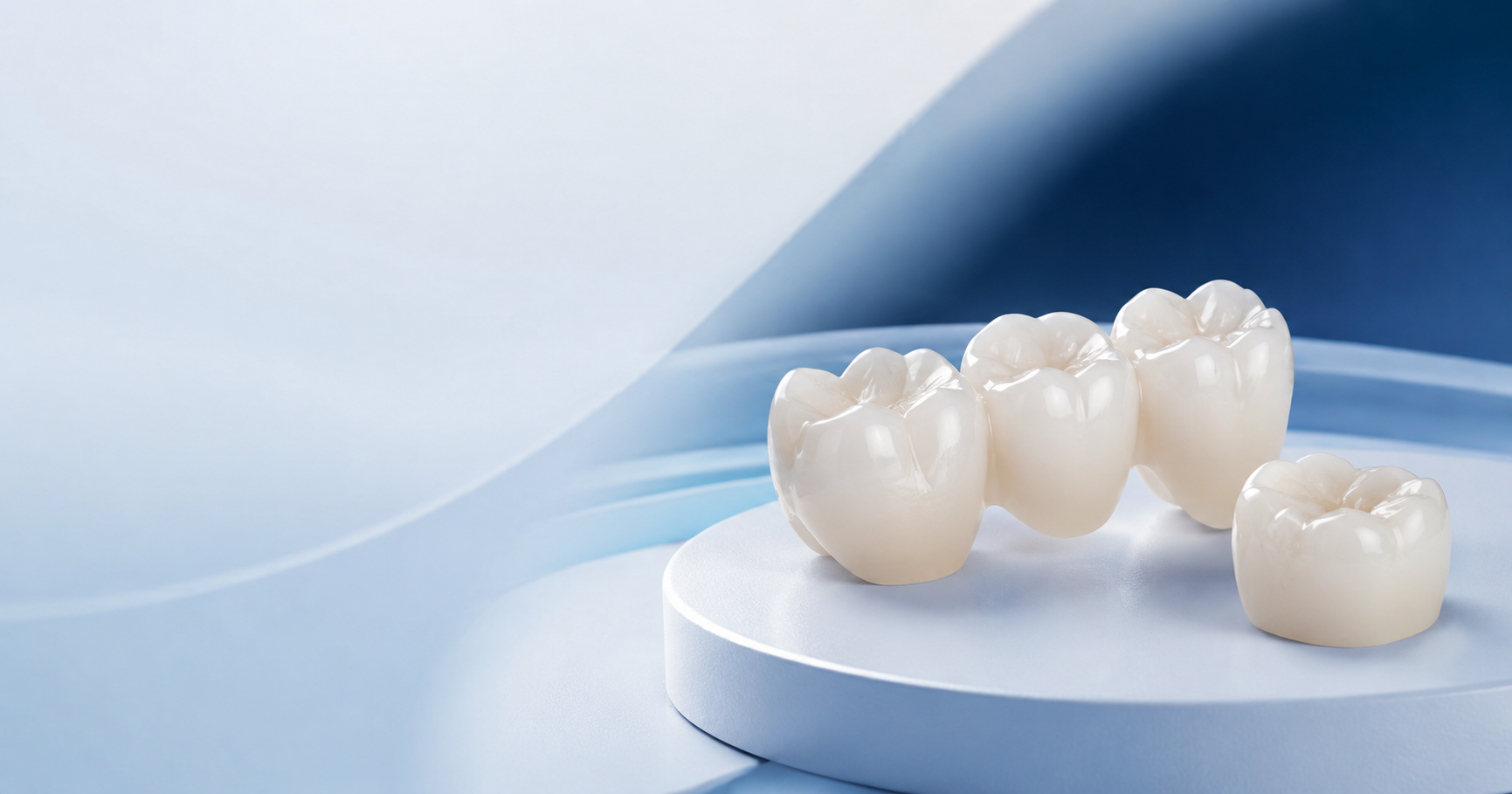
Zirconia crowns are made from zirconium dioxide, a highly durable ceramic material with no metal base. The crown covers the visible part of the tooth and helps restore its shape, strength and function.
The colour and shape are selected according to the surrounding teeth and the individual features of the smile. The aim is for the crown to look natural and fit properly within the bite.
What Are Zirconia Bridges?
A zirconia bridge is used to replace one or more missing teeth. It consists of connected crowns that are secured to neighbouring natural teeth or dental implants.
When a bridge is supported by natural teeth, they need to be suitable for this purpose. Their condition, the amount of healthy tooth structure remaining and the health of the gums are therefore assessed beforehand.
Zirconia bridges can provide good strength and a natural appearance. Whether this type of restoration is suitable depends on the position of the missing tooth, the number of missing teeth, the bite and the condition of the supporting teeth.
What Are the Benefits of Zirconia Crowns?
One of the main benefits of zirconia is its strength. This allows the material to be used in both the front and back areas of the mouth.
The main benefits of zirconia crowns include:
natural colour
no metal base
good strength
suitable for front and back teeth
good compatibility with the tissues in the mouth
precise production
good durability with proper planning and care
Do Zirconia Crowns Have Any Disadvantages?
Despite their benefits, zirconia crowns are not a universal solution. In some cases, another type of restoration may be more suitable. The choice should not be based only on price or the desire for a quick result. It is important to consider which option can restore the tooth reliably while preserving as much healthy tooth structure as possible.
How Is a Zirconia Crown Made and Placed?
Treatment usually includes several main steps:
The tooth, gums and bite are examined.
An X-ray is taken if necessary.
Decay and damaged existing fillings are removed.
Missing tooth structure is rebuilt if necessary.
The tooth is shaped to make room for the crown.
A conventional or digital impression is taken.
A temporary crown is placed when necessary.
The finished crown is tried in, and its colour, shape and contact with the surrounding teeth are checked.
The bite is adjusted and the crown is secured.
Two appointments are required in many cases. The exact number and duration of the visits depend on the condition of the tooth and the production method.
Tooth preparation is usually performed under local anaesthesia. Some temporary sensitivity may occur after placement, but it should gradually decrease.
How Long Do Zirconia Crowns Last?
There is no single lifespan that applies to all zirconia crowns. Their durability depends on:
the condition of the tooth underneath the crown
the quality of the restoration
the way the crown is secured
the bite
teeth grinding or clenching
oral hygiene
regular dental check-ups
To protect the crown and the tooth underneath it:
brush your teeth twice a day
clean carefully between the teeth
attend regular dental check-ups
do not use your teeth to open packaging
contact your dentist if you notice pain, movement or a change in your bite
The crown itself cannot develop decay. However, the natural tooth underneath it can be affected around the edge if plaque accumulates. Good oral hygiene therefore remains important after treatment.
How Should Zirconia Bridges Be Maintained?
With zirconia bridges, it is important to clean not only around the supporting teeth but also underneath the replacement tooth. Special dental floss, interdental brushes or other products recommended by your dentist can be used for this purpose.
Insufficient cleaning can lead to plaque accumulation, gum inflammation and problems with the supporting teeth. Proper daily care and regular dental check-ups are important for the long-term durability of the bridge.
Are Zirconia Crowns Suitable for You?
Zirconia crowns can be a good option when strength, a natural appearance and a restoration without a metal base are required. This does not mean that they are the best choice in every case.
The right treatment depends on the condition of the individual tooth, your bite, your gums and your expectations. The final decision is made after an examination and discussion of the available options.
If you are considering a zirconia crown or bridge, you can book an examination at Dr Grigorova’s dental practice. During the consultation, we will assess your individual case and discuss the suitable treatment options.